
Glazing Market Update - June 2026
The glazing market has found its footing. After the most significant industry-wide repricing event in years. Driven by price increases from every major manufacturer in April and May, the market has absorbed the shock and stabilized. Vendors are holding their new price floors, quote validity windows are normalizing, and no additional manufacturer increases are forecast for at least the next two quarters, barring a major escalation in global conditions.
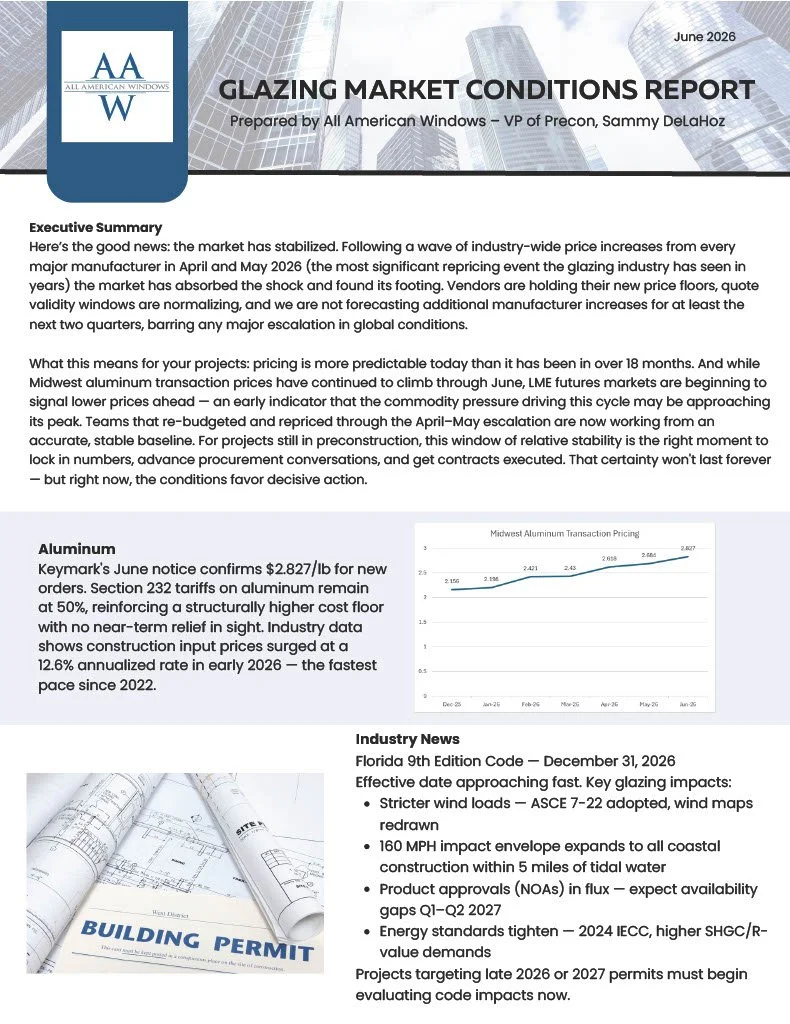
For projects in preconstruction, this is a window worth acting on. Pricing is more predictable now than it has been in over 18 months. While Midwest aluminum transaction prices kept climbing through June, reaching $2.827/lb, the highest level of 2026. LME futures are beginning to signal lower prices ahead, an early sign the commodity pressure driving this cycle may be near its peak. Teams that re-budgeted through the spring escalation are now working from an accurate, stable baseline. Now is the right moment to lock in numbers, advance procurement, and get contracts executed.
A few factors continue to shape the landscape:
Aluminum & costs. Section 232 tariffs remain at 50%, reinforcing a structurally higher cost floor with no near-term relief. Construction input prices surged at a 12.6% annualized rate in early 2026, the fastest pace since 2022.
Florida 9th Edition Code (effective Dec. 31, 2026). Stricter wind loads under ASCE 7-22, an expanded 160 MPH impact envelope for coastal construction within five miles of tidal water, tightening energy standards (2024 IECC), and product approvals (NOAs) in flux—expect availability gaps in Q1–Q2 2027. Projects targeting late-2026 or 2027 permits should be evaluating code impacts now.
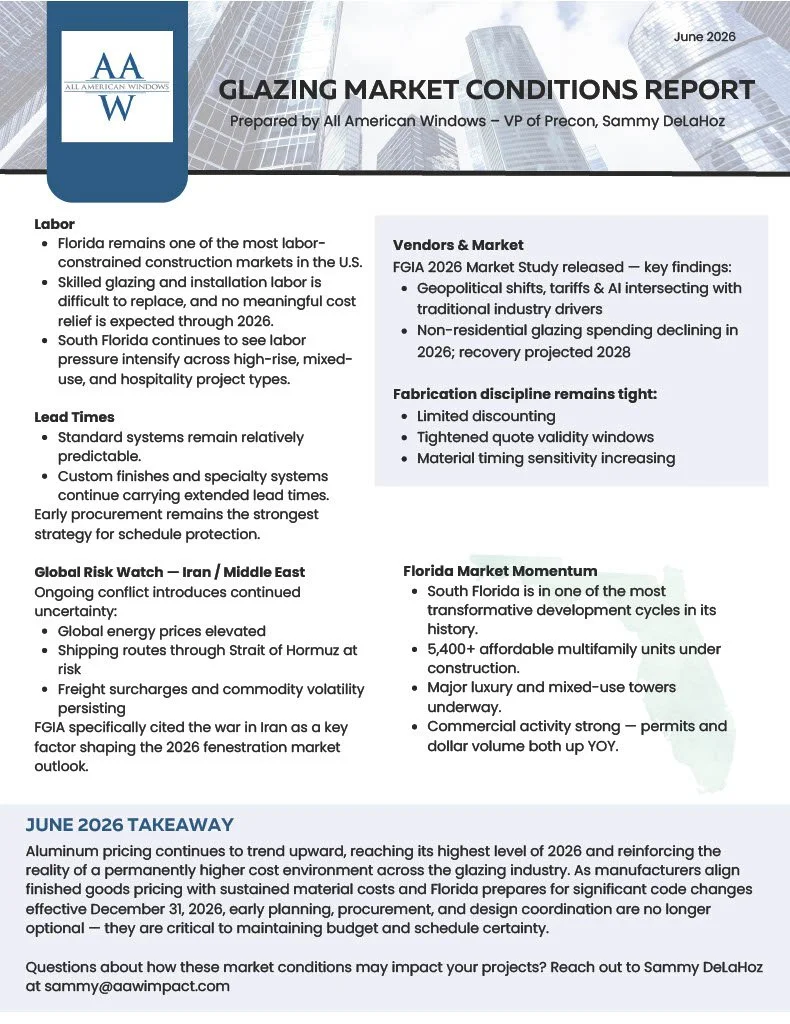
Labor. Florida remains one of the most labor-constrained construction markets in the country, with skilled glazing labor hard to replace and no meaningful cost relief expected through 2026. South Florida pressure continues to intensify across high-rise, mixed-use, and hospitality projects.
Lead times. Standard systems remain predictable, but custom finishes and specialty systems carry extended lead times. Early procurement is the strongest strategy for schedule protection.
Global risk. Ongoing Middle East conflict keeps energy prices elevated, puts Strait of Hormuz shipping routes at risk, and sustains freight surcharges and commodity volatility. FGIA cited the war in Iran as a key factor in its 2026 fenestration market outlook.
Florida momentum. South Florida is in one of the most transformative development cycles in its history 5,400+ affordable multifamily units under construction, major luxury and mixed-use towers underway, and commercial permits and dollar volume both up year-over-year.
The takeaway: The market favors decisive action right now. With pricing stable, costs structurally higher, and major code changes approaching, early planning, procurement, and design coordination are no longer optional they're critical to protecting budget and schedule.
Questions about how these conditions may impact your projects? Reach out to info@aawimpact.com